

First Generation (C1: 1953–1962)
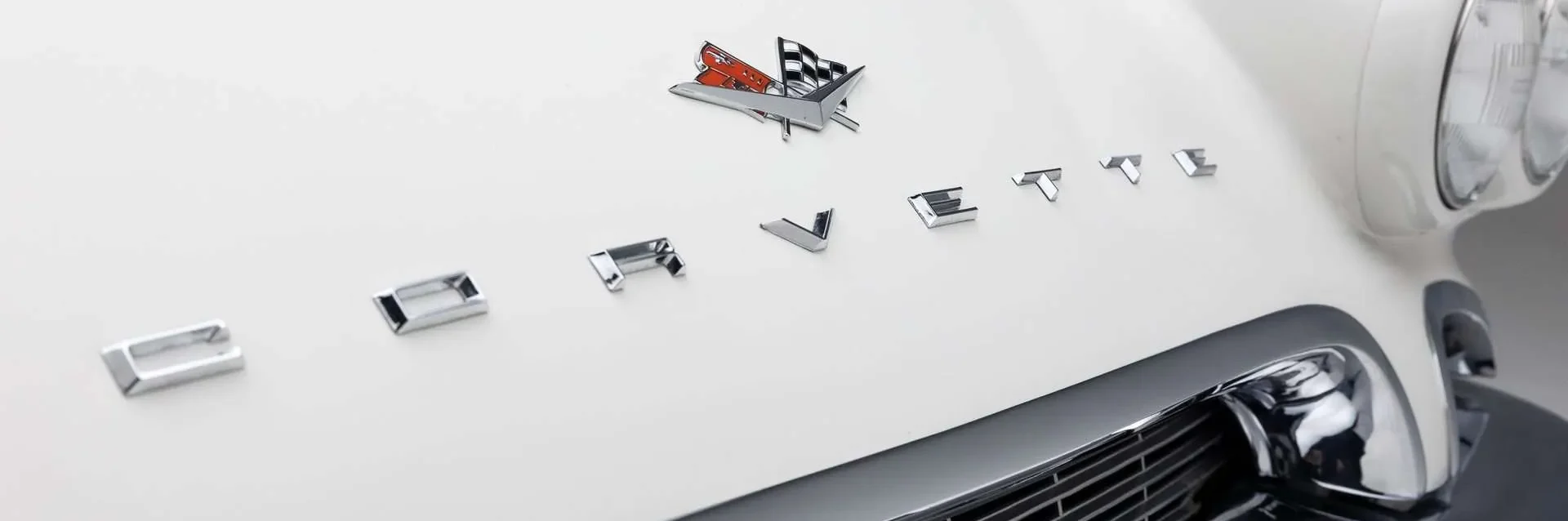
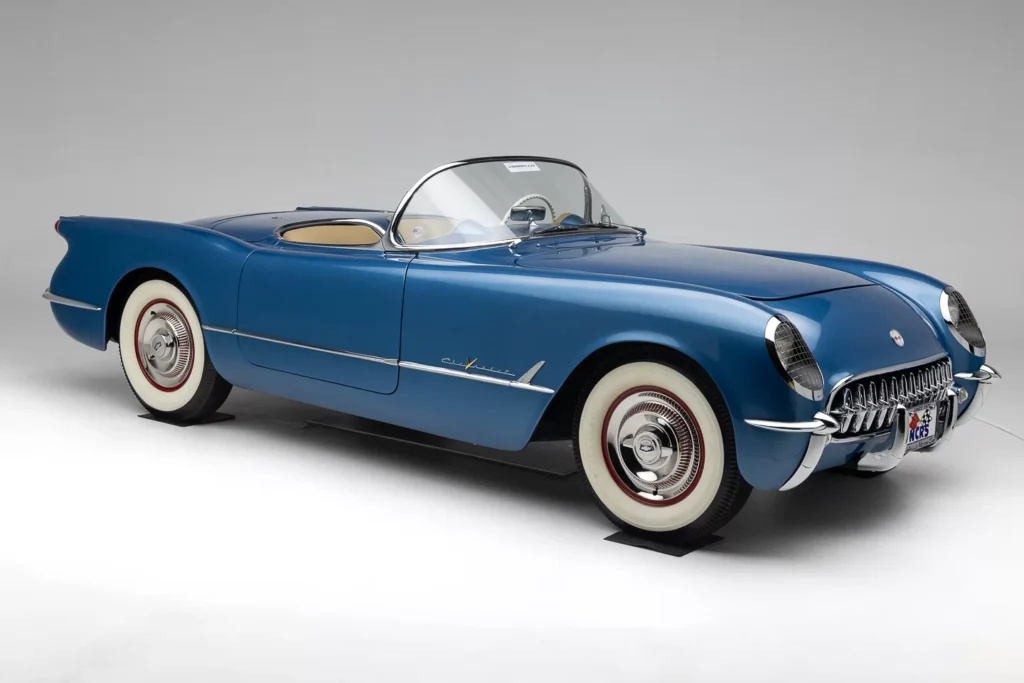
The first generation of the Corvette was introduced by Chevrolet late in the 1953 model year. Originally designed as a show car for the 1953 Motorama display at the New York Auto Show, it generated enough interest for General Motors to produce a version for public sale. The first production models were built on June 30, 1953, and are known as the “solid-axle” models because independent rear suspension was not introduced until the second generation. A total of 300 hand-built Polo White Corvette convertibles were produced for the 1953 model year.
For the 1954 model year, vehicles were available in Pennant Blue, Sportsman Red, Black, or Polo White, with a total of 3,640 units built. However, they did not set any sales records and sold rather slowly. The 1953 and 1954 model years were the only years that featured an engine other than a V8. These models were equipped with a 235 cubic inch (3.9 L) version of the second-generation Blue Flame inline-six engine, generating 150 horsepower.
Second Generation (C2: 1963–1967)
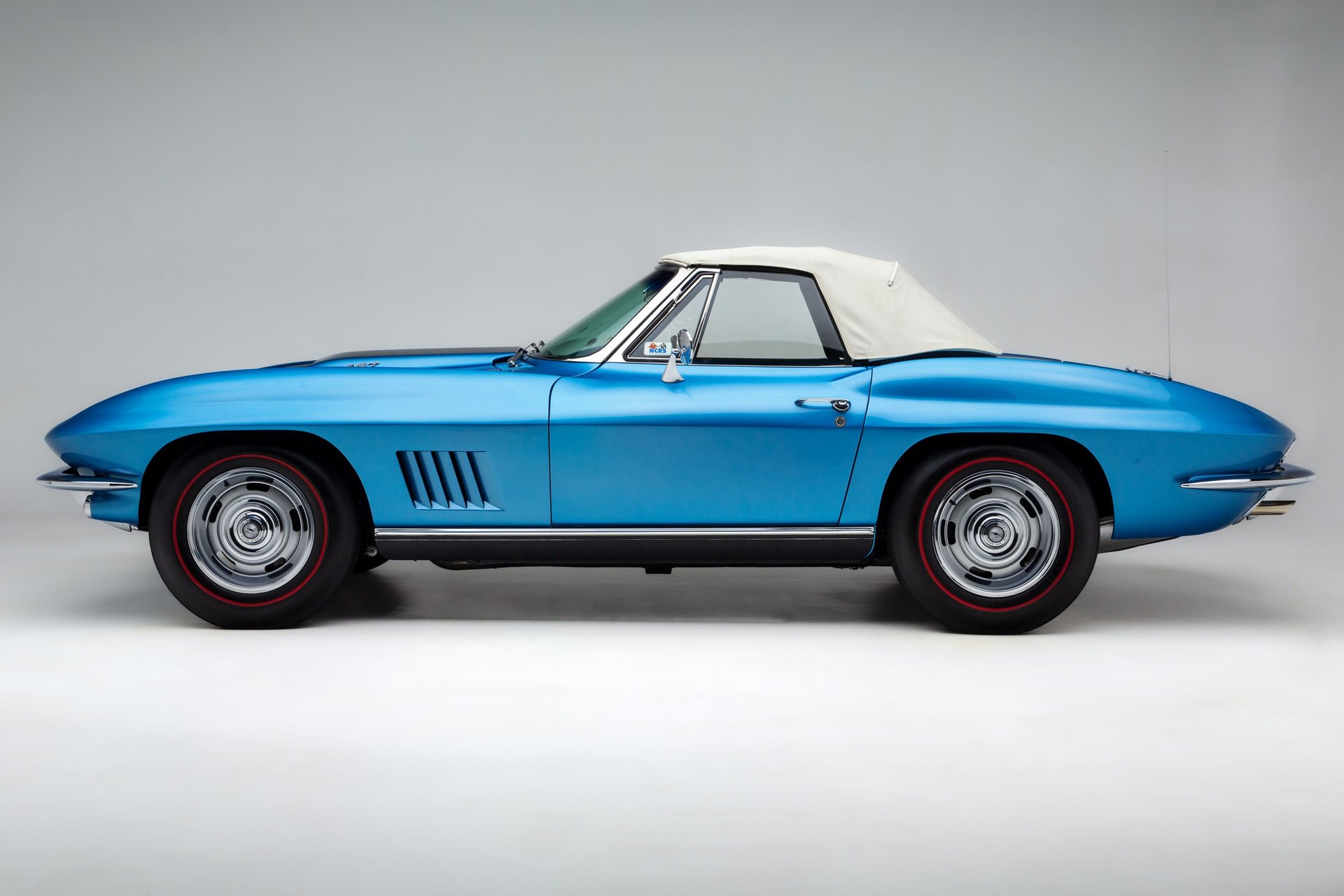
The second-generation Corvette (C2), which introduced the Sting Ray model, featured fiberglass body panels and was overall smaller than its predecessor, the first generation. The C2 is often referred to as the “mid-years” and was designed by Larry Shinoda, drawing significant inspiration from an earlier concept design known as the “Q Corvette.” Peter Brock and Chuck Pohlmann created this concept under the styling direction of Bill Mitchell.
In 1959, Bill Mitchell sponsored a car called the “Mitchell Sting Ray,” as Chevrolet had stepped back from factory racing during that time. This vehicle had a substantial impact on the styling of the C2, although it lacked a roof and did not indicate what the final version of the C2 would ultimately look like. Additionally, one of the design inspirations for the C2 was a Mako Shark that Mitchell caught while deep-sea fishing.
Third Generation (C3: 1968–1982)
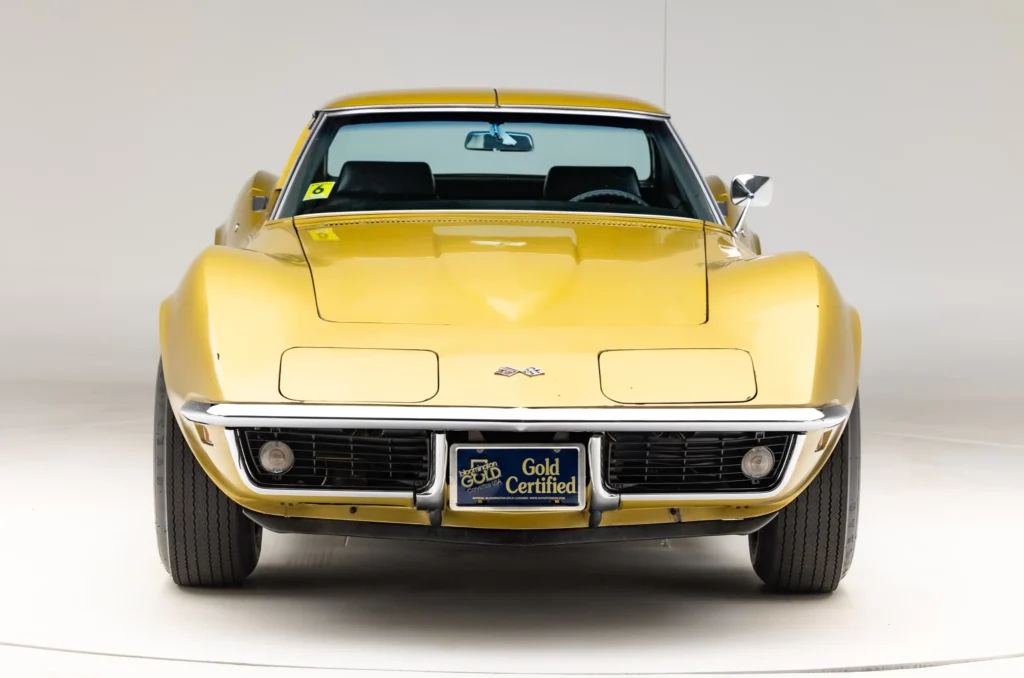
The third-generation Corvette (C3), inspired by the Mako Shark II concept car, was introduced for the 1968 model year and remained in production until 1982. While the engines and chassis components were largely carried over from the C2, both the body and interior were completely new. C3 coupes were notable for featuring the first-ever T-top removable roof panels.
In 1969, the C3 introduced the 350 cubic inch (5.7 L) engine, which replaced the earlier 327 cubic inch (5.36 L) as the base engine, though the power output remained at 300 bhp (224 kW). Notably, 1969 was the only year that a C3 could be optionally equipped with either a factory-installed side exhaust or a standard rear exit with chrome tips. Additionally, the all-aluminum ZL1 engine was introduced in 1969. This special big-block engine was rated at 430 hp (320 kW), but it was reportedly capable of producing around 560 hp (420 kW), enabling a ZL1 to complete a quarter-mile in just 10.89 seconds.
The C3 models also introduced several monikers that would be revived later, including LT-1, ZR-1, Z07, and Collector Edition. In 1978, the Corvette celebrated its 25th anniversary with a two-tone Silver Anniversary Edition, as well as an Indy Pace Car replica edition of the C3. That same year marked the first time a Corvette was used as the pace car for the Indianapolis 500.
Fourth Generation (C4: 1984–1996)
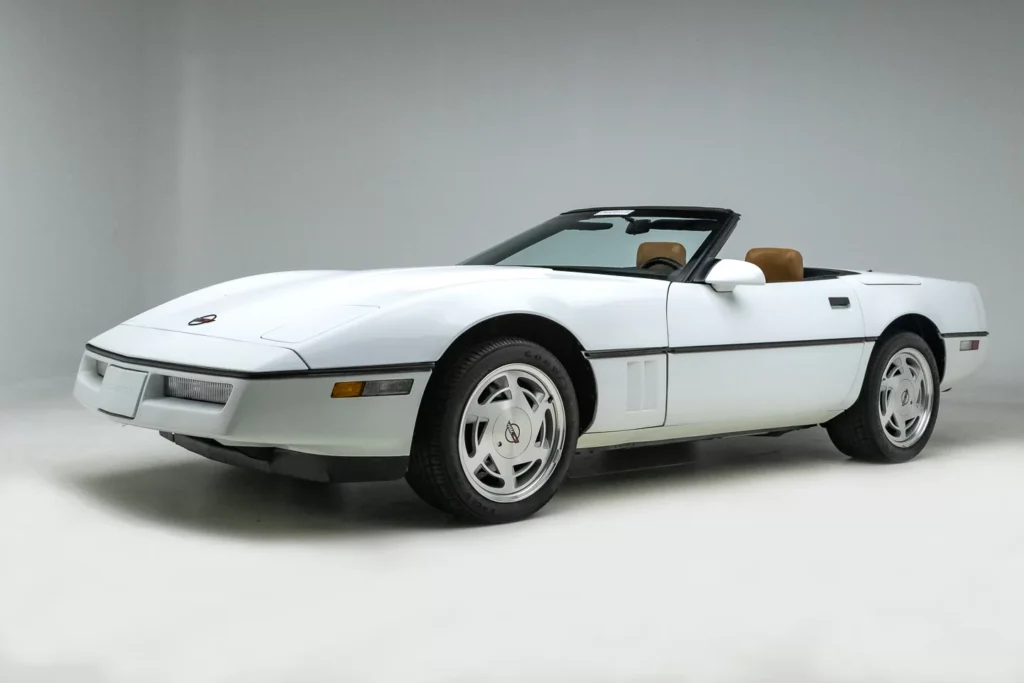
The fourth-generation Corvette (C4) was the first complete redesign of the Corvette since the 1963 model. Production was initially scheduled to begin for the 1983 model year; however, due to quality issues and part delays, only 43 prototypes for the 1983 model were produced, and these were never sold.
All of the 1983 prototypes were either destroyed or serialized to the 1984 model year, except for one. The remaining prototype featured a white exterior, a medium blue interior, an L83 350 cubic-inch, 205-horsepower V8 engine, and a 4-speed automatic transmission. After extensive testing and modifications, this prototype was initially retired and displayed on an external wall above the employee entrance of the Bowling Green Assembly Plant. It is the only surviving 1983 prototype and has since been removed, restored, and is now on public display at the National Corvette Museum in Bowling Green, Kentucky, where General Motors still owns it. On February 12, 2014, this valuable vehicle was nearly lost in a sinkhole that opened up beneath the museum, which also severely damaged eight other Corvettes.
Fifth Generation (C5: 1997–2004)
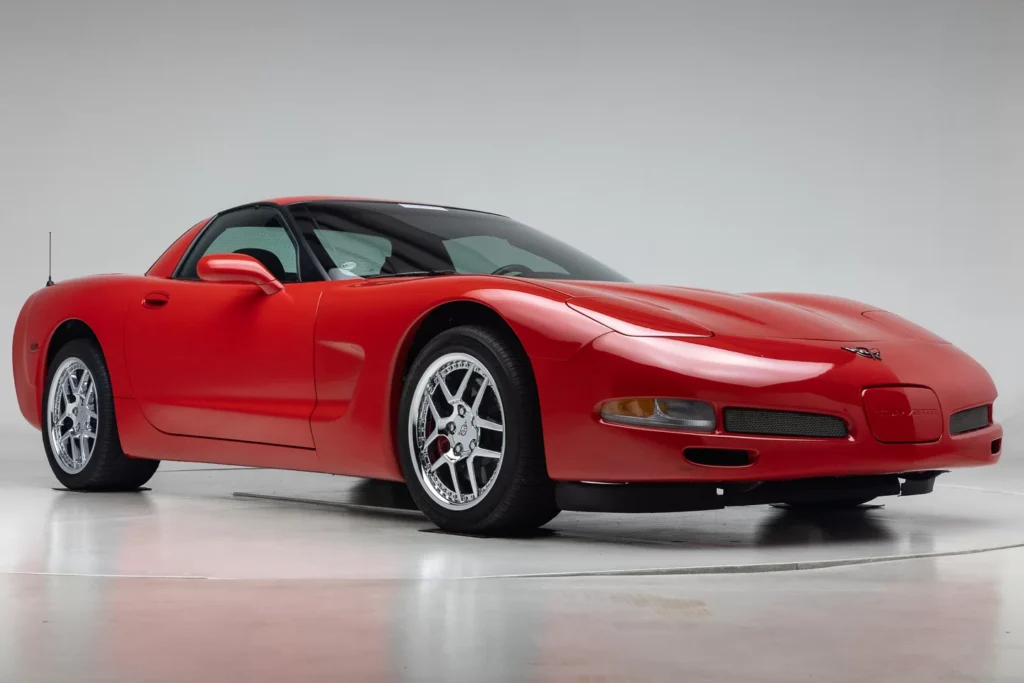
The fifth-generation Corvette (C5) was the most completely redesigned Corvette since its inception in 1953. Production of the C5 Corvette actually began in 1996, but quality/manufacturing issues delayed its release to the public until 1997, and it continued through the 2004 model year.
The C5 was a completely new design that featured many new concepts and manufacturing breakthroughs, which would be carried forward to the C6 and C7 models. The C5 had a top speed of 176 mph (283 km/h) and was judged by the automotive press to be a breakthrough, with vastly improved dynamics in nearly every area over the previous C4 design. Innovations included a 0.29 drag coefficient, a near 50/50 weight distribution, active handling (the first-ever stability control for a Corvette), and electronic power steering assistance. It also weighed less than the C4.
Sixth Generation (C6: 2005–2013)
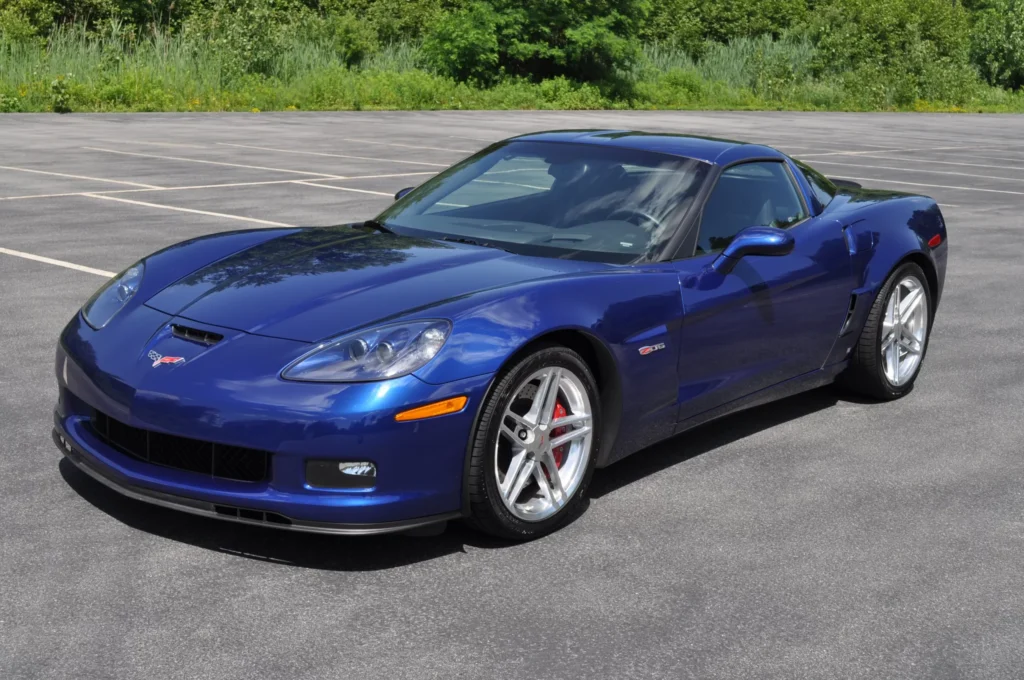
The sixth-generation Corvette (C6) brought a new and improved interior compared to the C5. As a result of the upgraded interior, the C6 had a slight increase in passenger hip room. It also featured an updated LS1/LS6 engine, now known as the LS2. This engine was primarily an LS1/LS6 with a bump in displacement from 5.7 liters to 6.0 liters. The increased displacement of the 6.0 bumped the LS2’s horsepower up by 50 BHP over its LS1 progenitor, although still 5 BHP less than the upgraded LS6 engine found in the previous C5 Z06. Thus, the LS2 was now at 364 cubic inches, producing 400 bhp (300 kW) at 6000 rpm and 400 lb⋅ft (540 N⋅m) at 4400 rpm, which gave the vehicle a 0–60 mph time of under 4.2 seconds. Its top speed was 190 mph (310 km/h).
Seventh Generation (C7: 2014–2019)
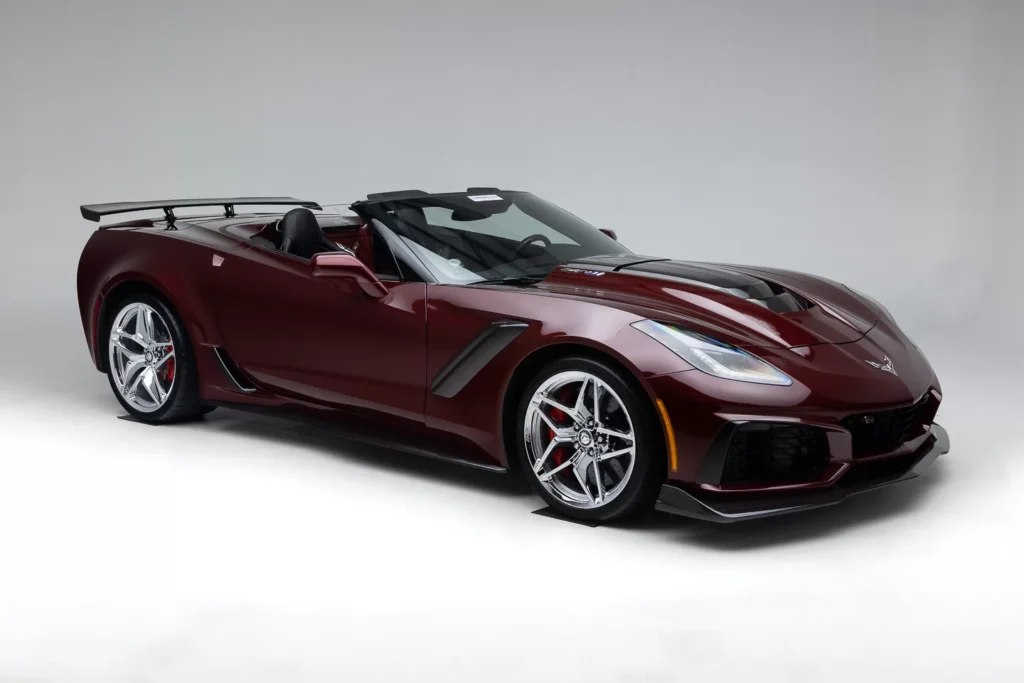
Development for the seventh-generation Corvette (C7) began in 2007. Originally set to be introduced for the 2011 model year, its introduction was delayed for three years. It was finally released for the 2014 model year. Mid-engine and rear-engine layouts had been considered, but the front-engine, rear-wheel drive (RWD) platform was chosen to keep production costs lower.
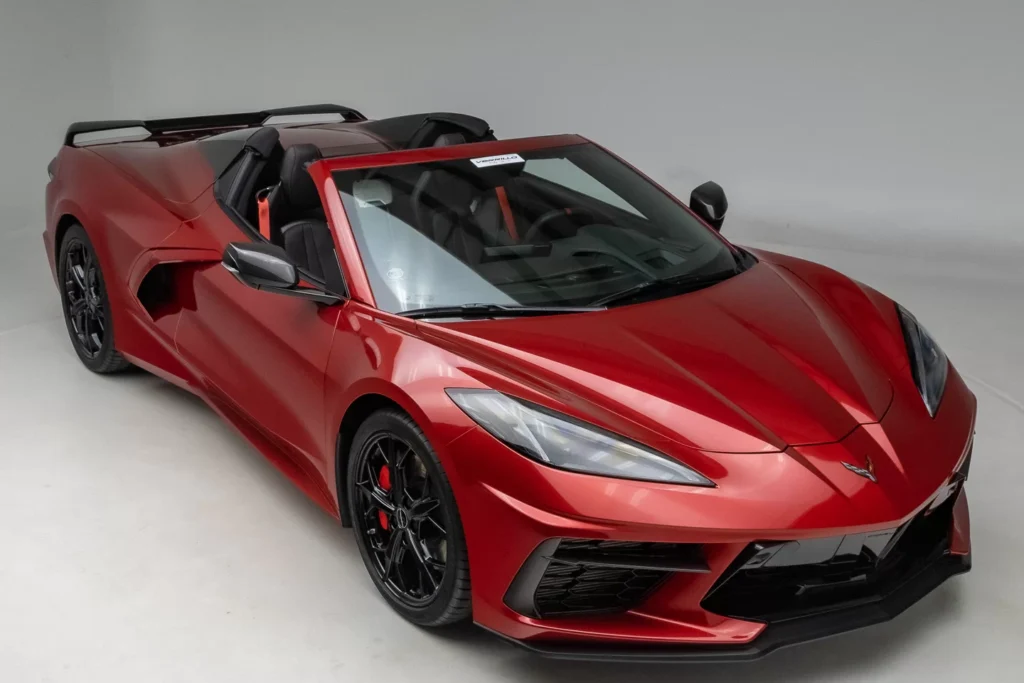
Eighth Generation (C8: 2020 – Current)
The 2020 Corvette C8, in both coupe and convertible configurations of the base-model Stingray, made its debut on July 18. The coupe and convertible are powered by a 6.2-liter naturally aspirated V8 called the LT2. This engine generates 495 horsepower and 470 lb-ft of torque when equipped with the Z51 performance package. The Corvette C8 convertible is the first Corvette with a retractable hardtop. The Corvette C8 is the first production Corvette to have a mid-engine configuration. It is also General Motors’ first mid-engine production car since the 1984 Pontiac Fiero.
In January 2020, the car became the most expensive vehicle sold at the Barrett-Jackson auction, selling for $3 million. The proceeds of the sale went to the Detroit Children’s Fund.